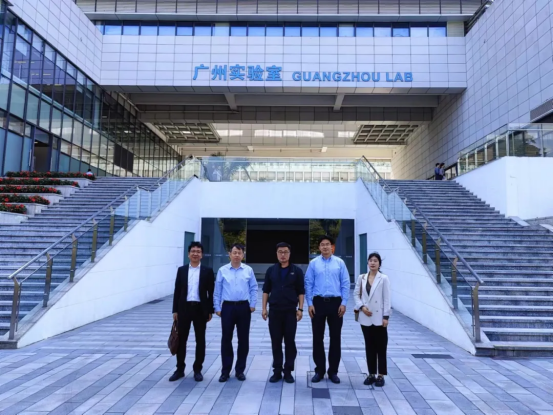
On the morning of January 10, 2024, the Shenzhen Cell Valley team, including Chief Scientist Wang Jianxun, Deputy General Manager Xiang Hua, Head of R&D Zhao Lijun, and Deputy Head of Marketing Yang Jianglong, visited Guangzhou Bioland Laboratory for exchange and discussion. They held symposium discussions with Professor Liu Huisheng and other key laboratory members. During the symposium, the two sides engaged in in-depth exchanges on the latest research progress and directions for collaboration in tumor cellular immunotherapy. Our Chief Scientist, Professor Wang Jianxun, introduced Shenzhen Cell Valley's development history and the advantages of using retroviral vectors for CAR-NK cell preparation. Professor Liu Huisheng presented his team's research directions and led a tour of the Guangzhou Bioland Laboratory. Professor Liu expressed great interest in our company's NK cell preparation project and indicated that after the Spring Festival, they would collaborate on "preclinical research on NK cell-based therapy for lung cancer."
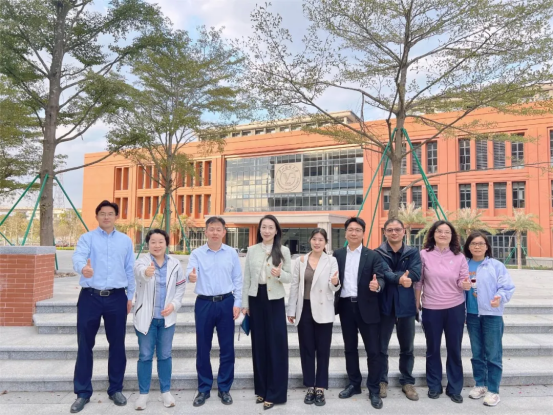
In the afternoon of the same day, the team led by Professor Wang Jianxun visited the GMU-GIBH Joint School of Life Sciences (hereinafter referred to as the "GMU-GIBH Joint School") for exchange. The delegation was warmly received by Party Branch Secretary Fang Shaoyuan, Deputy Party Branch Secretary Chen Xiangyi, Vice Dean Dai Jianwei, Vice Dean Zhang Xiaoren, Vice Dean and Director of the Biochemistry and Molecular Biology Teaching Office Gong Qing, Director of Biotechnology Ouyang Yongchang, Deputy Director of Biotechnology Su Xiaobo, and Director of the General Administration Office Tan Yin. They held symposium discussions on jointly building directions for future development.
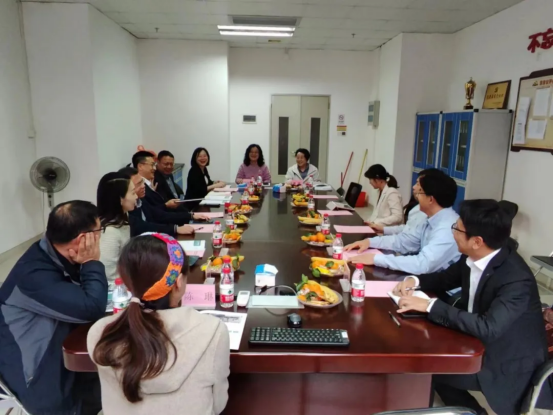
During the symposium, Vice Dean Gong Qing of the GMU-GIBH Joint School and Professor Wang Jianxun of Shenzhen Cell Valley successively provided comprehensive introductions to their respective institutions' development and team strengths. The two sides engaged in in-depth discussions on the current state of cellular immunotherapy development, the advantages of retroviral vectors, the latest research progress in TCR-T therapy, industry-academia-research integration, university-enterprise cooperation, and joint internship programs. Both parties shared a common focus on student further education and employment issues, and the Joint School invited Professor Wang Jianxun to deliver theoretical courses at GMU on cutting-edge cell therapy topics.
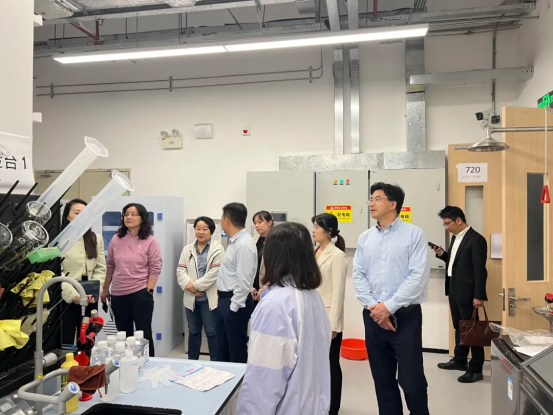
Subsequently, led by Vice Dean Gong Qing, the Cell Valley team toured the teaching laboratories and the laboratory facilities at the Science and Technology Building.
Professor Wang Jianxun noted that talent is one of the most critical supporting factors for the development of the emerging cell and gene therapy industry. Under the leadership of Party Branch Secretary Fang Shaoyuan, the GMU-GIBH Joint School has cultivated batch after batch of high-level talents, providing strong talent support for the development of the biopharmaceutical industry. Shenzhen Cell Valley possesses a mature talent cultivation model and will continue to be dedicated to creating an open, innovative, and collaborative talent development platform, providing more growth opportunities and platform resources for technical talents in the cell and gene therapy field. At the same time, the two parties will collaborate on TCR-T joint research based on retroviral vectors, jointly overcoming more technical barriers to benefit more cancer patients.
This exchange facilitated mutual agreement and laid a solid foundation for cooperation between the two parties. Shenzhen Cell Valley and the GMU-GIBH Joint School will work together to establish industry talent cultivation mechanisms and jointly contribute to the development of China's cell and gene therapy industry.

About Bioland Laboratory
Bioland Laboratory (formerly the Guangdong Provincial Laboratory of Regenerative Medicine and Health, Guangzhou) was established in December 2017 and is hosted by the Guangzhou Municipal Government. It is one of the first four provincial-level laboratories in Guangdong Province built to benchmark national laboratories. Since its establishment, the laboratory has focused on national strategic needs, major clinical needs, biopharmaceutical industry demands, and key technological bottlenecks. Its research spans five major areas: stem cell and regenerative medicine basic research, clinical innovation research, advanced biomedical devices, bioinformatics, and biosafety. The laboratory has recruited 1,500 research staff, published 1,100 articles, filed 259 patents, and achieved 23 COVID-19 research outcomes. It has been honored with the national science and technology system "Advanced Collective in Combating the COVID-19 Pandemic" and the Guangzhou Technology Market "Top 10" Research Institutes, among other titles, fully demonstrating its leading role and establishing a distinctive "Bioland Laboratory" brand.

About the GMU-GIBH Joint School of Life Sciences
The Guangzhou Medical University-Guangzhou Institutes of Biomedicine and Health, Chinese Academy of Sciences Joint School of Life Sciences (GMU-GIBH Joint School of Life Sciences) was established in July 2016. It consists of two campuses—Guangzhou Medical University and the Guangzhou Institutes of Biomedicine and Health, Chinese Academy of Sciences—and represents a unique collaboration between a university and the Chinese Academy of Sciences, integrating teaching and scientific research. The Biotechnology program is a national first-class undergraduate program, and the school has a doctoral degree granting authority in the first-level discipline of biology.
The school brings together multi-source resources and a strong faculty, including distinguished talents such as Academicians of the Chinese Academy of Sciences, recipients of the National Outstanding Youth Science Fund, Young Scholars of the "Changjiang Scholars" program, Chief Scientists of National Key R&D Programs, National High-end Foreign Experts, Guangzhou Outstanding Teachers, and Yangcheng Most Beautiful Teachers. These experts participate in the cultivation of undergraduate, master's, and doctoral students and undertake multi-level, multi-category research projects in the life sciences. The school aims to cultivate talents with both integrity and ability, a spirit of innovation and exploration, and strong scientific literacy and practical skills. It continues to create high-quality resources, offering numerous provincial, municipal, and university-level first-class courses and high-quality courses, multiple Guangdong provincial online teaching excellence cases for undergraduate education, and Guangdong provincial graduate demonstration course projects. The school also hosts national-level virtual simulation experimental teaching centers, provincial-level experimental teaching demonstration centers, and provincial-level university student practice teaching bases, among other national and provincial experimental practice platforms.
 Scan to follow our latest news
 Working hours: Monday to Friday, 9:00-18:00
Contact:Ms. Lai
Email:laijiaqi@sz-cell.com
Address:No. 1, Rongtian Road, Jinsha Community, Kengzi Street, Pingshan District, Shenzhen, China (Hepure Biomedical Ecological Park)